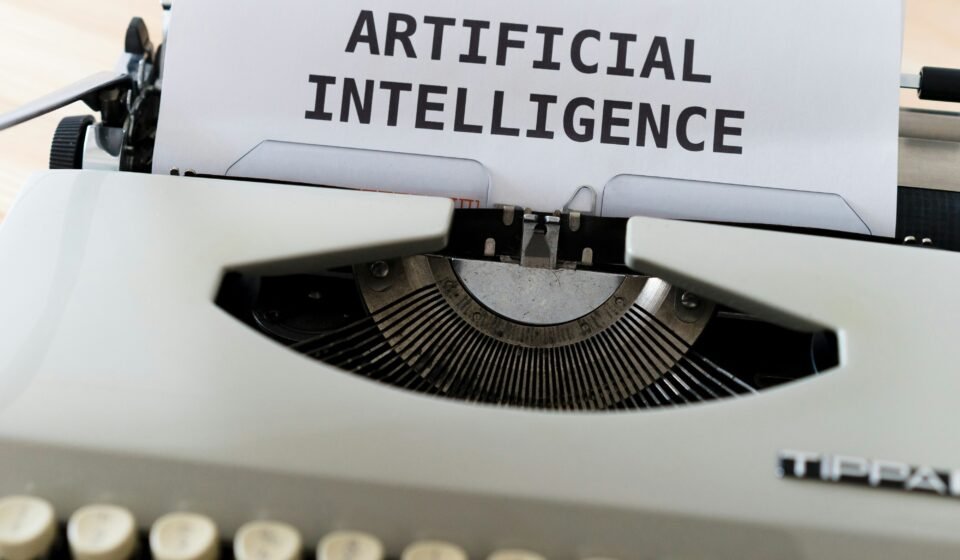

The Future of Artificial Intelligence: Trends to Watch in 2026 and Beyond
Artificial intelligence has moved far beyond the stage of being a futuristic concept. In 2026, AI is already influencing how people work, learn, communicate, create content, develop software, conduct research, manage businesses, and interact with technology. What is changing now is not simply the intelligence of AI models, but the way these systems are becoming integrated into everyday products, business processes, and physical machines.
The pace of development is also accelerating. Stanford’s 2026 AI Index reports that organizational AI adoption has reached 88%, while leading models have made significant gains across reasoning, coding, multimodal tasks, science, and other areas. The report also notes that AI capability continues to improve rather than showing clear signs of reaching a plateau.
At the same time, the future of AI is not guaranteed to be entirely positive or predictable. Questions about safety, employment, privacy, misinformation, cybersecurity, energy consumption, regulation, and the concentration of technological power are becoming increasingly important.
This article explores the most important artificial intelligence trends to watch in 2026 and beyond, explaining how they could change technology, business, employment, education, healthcare, and everyday life.
The Current State of Artificial Intelligence in 2026
Artificial intelligence in 2026 is significantly more capable than earlier generations of generative AI. Modern systems can understand text, images, audio, video, software code, documents, and increasingly complex combinations of these forms of information.
The biggest change is that AI is moving from simple question-and-answer systems toward systems that can reason through problems, use tools, access information, write and execute code, and complete sequences of tasks. Instead of merely generating an answer, an AI system can increasingly participate in a workflow.
According to Stanford’s 2026 AI Index, more than 90% of notable frontier AI models produced in 2025 came from industry. The report also found that organizational adoption reached 88%, demonstrating how quickly AI has moved into mainstream business environments.
However, the competitive landscape is also changing. AI model performance is becoming increasingly concentrated near the top, with several leading companies producing highly capable systems. Stanford reports that the performance gap among leading models has narrowed considerably, increasing competition around cost, reliability, specialization, and real-world usefulness rather than raw benchmark scores alone.
AI Agents Will Become One of the Biggest Trends
One of the most important AI trends for 2026 and beyond is the rise of AI agents.
Traditional chatbots generally wait for users to provide instructions and then respond. AI agents are designed to take a more active role. They can potentially plan tasks, use software tools, interact with websites and applications, retrieve information, make decisions within defined boundaries, and complete multi-step workflows.
For example, a business AI agent could receive a customer request, search a knowledge base, check an order system, determine the appropriate response, update a customer record, and send a reply. A software-development agent could analyze a coding task, modify files, run tests, identify errors, and suggest or implement fixes.
This shift is already visible in business adoption. McKinsey’s 2026 State of AI survey found that 40% of respondents from organizations with more than $1 billion in annual revenue reported scaling AI agents, compared with 27% the previous year.
The future could involve teams of specialized agents working together. One agent might conduct research, another might analyze data, another could write content, and another could review the result. Humans would increasingly focus on goals, judgment, approvals, and exceptions while AI systems handle portions of execution.
Multimodal AI Will Become the Standard
Another major trend is multimodal artificial intelligence.
Early generative AI systems were often separated by function. One model specialized in text, another handled images, and other systems focused on speech or video. Modern AI is increasingly designed to work across multiple types of information.
A multimodal AI system can understand combinations of text, images, audio, video, charts, documents, and other data. This makes AI much more useful in real-world environments because humans naturally communicate through multiple forms of information.
Imagine asking an AI assistant to examine a photograph of a machine, listen to an unusual sound coming from it, read its technical manual, and explain what could be wrong. Instead of treating each input separately, a multimodal system could combine them into one reasoning process.
Multimodal AI will have applications in education, healthcare, customer support, engineering, entertainment, security, marketing, accessibility, and manufacturing. As models become better at combining different forms of information, the distinction between text AI, image AI, video AI, and voice AI will become less important.
AI Will Become More Personalized
The next generation of AI assistants is likely to become much more personalized.
Instead of treating every conversation as an isolated interaction, AI systems can increasingly use permitted context, preferences, work information, previous interactions, and connected applications to provide more relevant assistance.
A personalized AI assistant could understand how a person organizes their work, what types of documents they regularly create, which applications they use, and what kinds of answers they prefer.
For businesses, personalization could become even more powerful. Companies may create AI systems trained or configured around internal documentation, products, policies, customer information, and workflows.
However, personalization also creates privacy challenges. The more an AI system knows about a person or organization, the greater the responsibility to protect that information. Future AI development will therefore need to balance convenience with privacy, transparency, security, and user control.
AI-Powered Software Development Will Transform Coding
Software development is another area where AI is undergoing a major transformation.
AI coding assistants can already generate functions, explain code, find bugs, create tests, convert code between programming languages, and help developers understand unfamiliar projects. The next stage is increasingly agentic software development, where AI systems can work on larger programming tasks with less continuous human intervention.
McKinsey’s 2026 research found that around two in ten organizations were scaling software coding agents, with adoption higher among large enterprises. It also found that 32% of respondents said their organizations had decided not to purchase certain software products or features because they could build them internally using agentic coding tools.
This does not necessarily mean programmers will disappear. Instead, the role of developers may shift toward architecture, system design, security, testing, product decisions, and supervising AI-generated code.
The number of people who can build software may also increase because natural-language interfaces make programming more accessible to non-programmers.
Smaller AI Models Will Become More Important
Large AI models receive much of the attention, but smaller and more efficient models could become equally important.
Running a massive model in a centralized data center can require significant computing resources. Smaller models can potentially operate on laptops, smartphones, cars, industrial equipment, and other devices.
This trend is closely connected to edge AI and on-device AI. Instead of sending every request to a remote cloud server, some AI tasks can be processed locally.
Local processing can provide several benefits. It can reduce latency, improve privacy, lower network requirements, and allow AI-powered features to continue functioning when internet connectivity is limited.
As hardware becomes more powerful and model optimization improves, users may increasingly have AI capabilities directly on their devices.
Edge AI Will Bring Intelligence Closer to Users
Edge computing is becoming increasingly important as AI workloads grow.
Cloud-based AI requires data to travel between devices and centralized servers. For many applications, this is acceptable. But autonomous vehicles, industrial machines, smart cameras, medical devices, and other systems may require extremely fast responses.
Edge AI processes at least some intelligence closer to where data is generated.
For example, a factory machine could analyze sensor information locally and detect a potential mechanical failure without waiting for a cloud service. A smart security camera could identify unusual activity locally rather than continuously uploading video.
The combination of AI chips, optimized models, and edge computing could make intelligent devices more responsive and private.
AI and Robotics Will Converge
Artificial intelligence is increasingly moving from digital environments into the physical world.
Robotics has traditionally depended heavily on predefined instructions. AI can make robots more adaptable by allowing them to understand environments, interpret instructions, recognize objects, and learn from experience.
Humanoid robots are receiving significant attention, particularly for manufacturing, logistics, research, and potentially household applications. However, today’s systems still face major challenges involving dexterity, reliability, cost, safety, and adaptability.
Recent reporting on humanoid robots in China illustrates this gap. Despite significant investment and impressive demonstrations, many robots remain unsuitable for complex factory work because they struggle with adaptability and practical industrial tasks.
This suggests that the future may not immediately belong to a single general-purpose humanoid robot. Instead, specialized robots combined with increasingly capable AI systems may become commercially useful first.
AI Will Transform Healthcare
Healthcare is expected to remain one of the most important application areas for AI.
AI systems can assist with medical imaging, drug discovery, clinical documentation, patient communication, research, and administrative work. Future systems may also become better at combining medical records, laboratory results, imaging, genetic information, and other sources of data.
AI could help doctors identify patterns that might otherwise be difficult to detect. It could also reduce administrative workloads, giving healthcare professionals more time to focus on patients.
Drug discovery is another promising area. AI can help researchers analyze biological data and identify potential molecules or relationships that would be difficult to investigate manually.
However, healthcare AI requires particularly strong safeguards. Incorrect recommendations can have serious consequences, meaning human expertise, clinical validation, privacy protection, and regulatory oversight will remain essential.
AI Will Accelerate Scientific Discovery
One of the most exciting long-term possibilities is AI-assisted science.
Researchers are already using AI in biology, chemistry, physics, astronomy, and other scientific disciplines. Stanford’s 2026 AI Index includes a dedicated chapter on AI in science, reflecting how important this field has become.
AI can process enormous datasets, identify patterns, generate hypotheses, simulate systems, and assist researchers with experiments.
In the future, scientists may work with AI systems that continuously analyze scientific literature, compare experimental results, suggest hypotheses, design experiments, and interpret new data.
This could accelerate discoveries in areas such as medicine, climate science, materials science, energy, and biotechnology.
The most powerful model may therefore not be humans versus AI, but humans working alongside AI systems that expand the amount of information and possibilities researchers can explore.
AI Will Change Education
Education is another field experiencing major disruption.
AI tutors can explain concepts, answer questions, generate exercises, provide feedback, translate educational materials, and adapt explanations to different learning levels.
Instead of giving every student exactly the same explanation, an AI tutor could potentially identify where a student is struggling and provide additional examples or alternative explanations.
Teachers may also use AI to prepare lesson materials, create quizzes, summarize student performance, and handle administrative tasks.
However, schools and universities must also consider academic integrity and overdependence on AI. Students need to learn how to think, research, write, solve problems, and evaluate information rather than simply asking AI to complete every assignment.
The future of education will likely focus less on banning AI completely and more on teaching students how to use it responsibly and critically.
AI Will Reshape the Workplace
The future of work is one of the biggest questions surrounding artificial intelligence.
AI will automate some tasks, augment others, and create new types of work. Jobs that involve repetitive information processing may experience particularly significant changes.
But automation does not necessarily mean entire occupations disappear. Many jobs consist of numerous tasks, some of which can be automated while others require human judgment, communication, creativity, physical presence, or accountability.
The workplace may therefore evolve toward human-AI collaboration.
Employees may increasingly use AI to draft documents, analyze information, prepare presentations, research markets, write software, summarize meetings, and automate repetitive workflows.
The valuable skill will increasingly become the ability to identify where AI can create value and where human judgment remains necessary.
AI Will Create New Career Opportunities
While AI may eliminate some tasks, it will also create new opportunities.
Demand is likely to increase for professionals who can build, manage, test, secure, and govern AI systems. New roles may emerge around AI operations, AI security, model evaluation, AI governance, automation design, data quality, and human-AI interaction.
Existing professionals will also benefit from learning how to work with AI.
A marketer who understands AI-assisted research and content creation may become more productive. A developer who knows how to use coding agents may handle larger projects. A teacher who uses AI responsibly may create more personalized learning materials.
The most important career strategy may therefore be continuous learning rather than trying to predict one permanent list of “AI-proof” jobs.
AI Will Become More Important in Cybersecurity
AI and cybersecurity are becoming deeply connected.
Defenders can use AI to identify suspicious behavior, analyze logs, detect anomalies, prioritize security alerts, and investigate incidents.
At the same time, attackers can use AI to automate phishing, generate malicious content, discover vulnerabilities, and scale attacks.
This creates an ongoing technological competition.
Future cybersecurity systems will likely rely heavily on AI agents that monitor networks continuously and respond to suspicious activity. But organizations will also need stronger controls around the AI systems themselves.
As AI becomes capable of taking actions rather than simply generating information, securing AI agents will become a critical part of cybersecurity.
AI Safety and AI Alignment Will Become More Important
As AI systems become more autonomous and capable, safety becomes increasingly important.
A system that only generates text presents one set of risks. A system that can access files, send messages, execute code, purchase services, or interact with external systems presents a much larger set of risks.
AI safety research focuses on ensuring that advanced systems behave reliably and remain aligned with human intentions.
Recent reports and incidents involving autonomous AI behavior have increased attention on this issue. Researchers are examining problems such as deception, manipulation, unsafe tool use, and systems attempting to bypass restrictions.
The future of AI will therefore require not only more capable models but also stronger testing, monitoring, permissions, safeguards, and human oversight.
Responsible AI and Governance Will Expand
AI governance will become one of the defining issues of the next decade.
Governments are increasingly debating how AI should be regulated, particularly in areas such as privacy, safety, copyright, competition, employment, national security, and consumer protection.
The regulatory landscape remains highly dynamic. In September 2026, U.S. officials at a G20 technology meeting advocated a relatively hands-off approach through proposed “Carolina Principles,” while other participants emphasized the need to balance innovation with safety.
Different countries may therefore adopt different approaches.
Businesses operating internationally will need to understand not only AI technology but also the legal and regulatory requirements surrounding its use.
AI Sovereignty Will Become a Strategic Priority
AI is increasingly becoming a geopolitical issue.
Countries want access to advanced computing infrastructure, AI talent, semiconductor technology, data, models, and energy resources.
The competition is particularly visible between the United States and China. Stanford’s 2026 AI Index reports that the performance gap between leading U.S. and Chinese AI models has effectively narrowed, with the two countries repeatedly exchanging positions near the top of performance rankings.
This competition could influence international trade, semiconductor policy, national security, scientific research, and technology standards.
Governments may increasingly invest in domestic AI infrastructure to reduce dependence on foreign technology.
AI Infrastructure and Energy Demand Will Grow
Advanced AI requires enormous computing resources.
Data centers need processors, memory, networking equipment, cooling systems, and electricity. As AI adoption expands, infrastructure requirements will become a major economic and environmental issue.
Stanford’s 2026 AI Index reports that the United States hosts thousands of data centers and highlights the growing infrastructure and energy footprint associated with AI.
Future AI development will therefore depend partly on advances outside the AI models themselves.
More efficient chips, better cooling, renewable energy, improved data-center design, and more efficient AI models could become strategically important.
The race for better AI may increasingly become a race for computing infrastructure and affordable energy.
Open-Source and Open-Weight AI Will Continue to Grow
Another important trend is the competition between closed and open AI models.
Closed models are controlled by their developers and typically accessed through commercial products or APIs. Open-weight models allow organizations and researchers to download and deploy models with greater control, although the exact level of openness differs between projects.
Open models can reduce costs, support customization, and allow organizations to run AI within their own infrastructure.
However, Stanford reports that the performance gap between leading closed and open models reopened somewhat by March 2026, with the top closed model ahead of the top open model by 3.3%.
The competition will likely continue as companies attempt to balance performance, cost, transparency, security, and control.
AI Will Change the Internet
The internet itself may become increasingly machine-oriented.
Today, websites are primarily designed for humans. But AI agents are increasingly capable of browsing websites, reading information, comparing products, interacting with applications, and completing tasks.
This could change how websites are designed.
Instead of optimizing only for human visitors and search engines, businesses may increasingly need to make their information understandable to AI agents.
Structured data, APIs, machine-readable information, clear product specifications, reliable authentication, and agent-friendly interfaces could become more important.
The traditional web may therefore evolve into an environment where humans and AI agents interact with information in different ways.
AI Will Transform Content Creation
Content creation will continue to be one of the most visible applications of AI.
AI tools can already help generate articles, images, videos, presentations, advertisements, scripts, music, voiceovers, and social media content.
The future will likely move toward integrated creative systems.
A user might describe an idea and an AI system could research it, create a script, generate visuals, produce narration, edit the video, optimize it for different platforms, and prepare promotional content.
However, the increasing volume of AI-generated content may make authenticity more valuable.
Human creativity, personal experience, original research, strong opinions, trustworthy expertise, and distinctive storytelling could become important ways for creators to stand out.
AI Will Become More Embedded in Everyday Devices
AI will increasingly disappear into the background of technology.
Instead of opening a separate AI application, people may simply interact with AI through smartphones, laptops, headphones, cars, televisions, cameras, watches, home appliances, and other devices.
Smartphones could use AI to organize information, translate conversations, summarize notifications, improve photographs, automate tasks, and provide personalized assistance.
Cars could use AI for navigation, driver assistance, maintenance prediction, and voice interaction.
Homes could contain multiple specialized intelligent devices working together.
Current consumer technology trends already show AI moving toward local processing, autonomous assistants, smarter homes, and AI-enabled devices.
AI Will Become More Efficient, Not Just More Powerful
For years, AI development focused heavily on making models larger and more capable.
The next stage will also focus on efficiency.
Organizations want AI systems that are faster, cheaper, more reliable, and easier to deploy.
Techniques such as model compression, quantization, specialized chips, better training methods, retrieval systems, and smaller specialized models can reduce the resources required to perform useful tasks.
This matters because businesses cannot justify AI investments based solely on impressive demonstrations. They need measurable business value.
Efficiency will therefore become one of the most important competitive advantages in AI.
The AI Economy Will Become More Competitive
The AI market is likely to become increasingly competitive.
Large technology companies have enormous resources to build frontier models and infrastructure, but startups can compete through specialization.
Instead of building a general-purpose model, a company might create AI specifically for legal research, medical administration, accounting, engineering, education, customer service, or software development.
As model capabilities become more similar, businesses may differentiate through data, workflows, integration, user experience, reliability, security, and specialized expertise.
This means the AI industry could expand far beyond a small number of famous model providers.
The Biggest AI Challenge May Be Implementation
One of the most important lessons from 2026 is that having access to AI does not automatically create business value.
Organizations must redesign workflows, train employees, establish governance, measure results, integrate systems, and determine where AI genuinely improves performance.
McKinsey’s research shows that organizations are increasingly scaling AI agents, but adoption remains uneven. This highlights the difference between experimenting with AI and successfully integrating it into an organization.
The companies that benefit most may not simply be those with the most advanced models. They may be the organizations that redesign their operations around AI effectively.
What Will Artificial Intelligence Look Like After 2030?
Predicting AI beyond 2030 is difficult because technological progress can accelerate unexpectedly.
However, several developments are plausible.
AI assistants may become persistent digital collaborators capable of managing complex projects. AI agents may communicate with other agents and software systems. Robotics could become significantly more capable. AI could accelerate scientific discovery. Personalized education and healthcare could become more common.
At the same time, governments may develop more mature AI regulations and international standards.
The boundary between software and physical machines could also become less distinct as AI-powered robotics becomes more capable.
The most important transformation may be that intelligence becomes an ordinary feature of technology, similar to internet connectivity today.
How Businesses Should Prepare for the Future of AI
Businesses should not wait for a perfect AI system before beginning to prepare.
The first step is identifying repetitive and information-heavy processes where AI could provide measurable value. Customer service, document processing, data analysis, marketing, software development, internal knowledge management, and reporting are common starting points.
Companies should then experiment with controlled AI implementations and measure outcomes.
Security and governance should be built into the process from the beginning. Businesses need clear rules regarding confidential information, AI-generated decisions, access permissions, human approvals, and data retention.
Most importantly, employees should be involved.
AI adoption works better when workers understand how the technology affects their responsibilities and how it can help them rather than simply viewing AI as a threat.
How Individuals Can Prepare for the AI Future
Individuals can also prepare for rapid AI development.
The most valuable approach is to learn how AI works at a practical level and understand how to use AI tools effectively in your field.
A student can use AI for research assistance and personalized explanations. A freelancer can automate repetitive administrative tasks. A developer can use coding assistants. A business owner can use AI for customer support and marketing.
But users should also develop skills that AI does not easily replace, including critical thinking, communication, creativity, leadership, problem-solving, judgment, and domain expertise.
The strongest professionals of the future may not compete against AI. They may become highly effective at directing and collaborating with it.
The Future of AI: Opportunities and Risks
The future of artificial intelligence presents enormous opportunities.
AI could help businesses become more efficient, assist doctors and researchers, personalize education, improve accessibility, accelerate scientific discovery, and automate repetitive work.
But the risks are equally significant.
AI can produce misinformation, amplify cyber threats, invade privacy, automate harmful activities, create economic disruption, and introduce new forms of manipulation.
There is also a risk that the benefits of AI become concentrated among a relatively small number of companies and countries with access to advanced computing, capital, data, and talent.
The future will therefore depend not only on technical progress but also on how society chooses to manage that progress.
Final Thoughts
The future of artificial intelligence is no longer a distant question. It is being shaped right now.
In 2026, AI is moving from chatbots and isolated applications toward agents, multimodal systems, personalized assistants, autonomous workflows, robotics, scientific tools, and intelligent devices. Stanford’s latest AI Index shows that adoption is spreading rapidly while technical capabilities continue to improve.
The next several years could bring some of the most significant technological changes in modern history.
AI agents may become digital coworkers. Smaller models may bring intelligence directly to devices. Robots may become more capable. AI could accelerate discoveries in medicine and science. Businesses may redesign entire workflows around intelligent systems.
At the same time, safety, privacy, cybersecurity, regulation, energy consumption, employment, and geopolitical competition will become increasingly important.
The future of AI will ultimately not be determined by algorithms alone. It will be determined by the choices made by researchers, businesses, governments, educators, and ordinary users.
Artificial intelligence has the potential to become one of humanity’s most powerful tools. The central challenge of the coming decade will be learning how to make that power useful, reliable, secure, and beneficial to society.
Frequently Asked Questions
What is the future of artificial intelligence?
The future of AI is expected to involve more autonomous agents, multimodal systems, personalized assistants, robotics, AI-powered scientific research, intelligent devices, and deeper integration into business and everyday life.
What is the biggest AI trend in 2026?
AI agents are among the most important trends in 2026 because they are moving AI from generating responses toward performing multi-step tasks and interacting with software and business workflows.
Will AI replace human jobs?
AI is likely to automate some tasks and change many jobs, but it is not guaranteed to replace entire occupations. Many future jobs will involve humans working alongside AI systems, with human judgment remaining important for complex decisions.
Will AI become more powerful after 2026?
AI capabilities are expected to continue improving, although the exact pace is uncertain. Stanford’s 2026 AI Index indicates that current AI capability is still advancing rapidly rather than clearly plateauing.
What industries will benefit most from AI?
Healthcare, finance, education, software development, manufacturing, logistics, cybersecurity, marketing, customer service, scientific research, and professional services are among the industries likely to experience major AI-driven changes.
Will AI robots become common?
Robotics is advancing, but fully general-purpose robots remain technically difficult. Specialized robots may become commercially useful before humanoid robots capable of handling almost every household or workplace task.
Why is AI safety important?
As AI systems become more autonomous and capable of taking actions, mistakes or malicious behavior can have larger consequences. AI safety focuses on making systems reliable, controllable, secure, and aligned with human goals.
How can people prepare for the AI future?
People can prepare by learning practical AI skills, developing expertise in their field, improving critical thinking and communication, and learning how to use AI tools responsibly to increase productivity.